
Common names
Freshwater Whipray, Porcupine ray.
Binomial
Urogymnus dalyensis.
Synonyms
Himantura dalyensis.
Identification
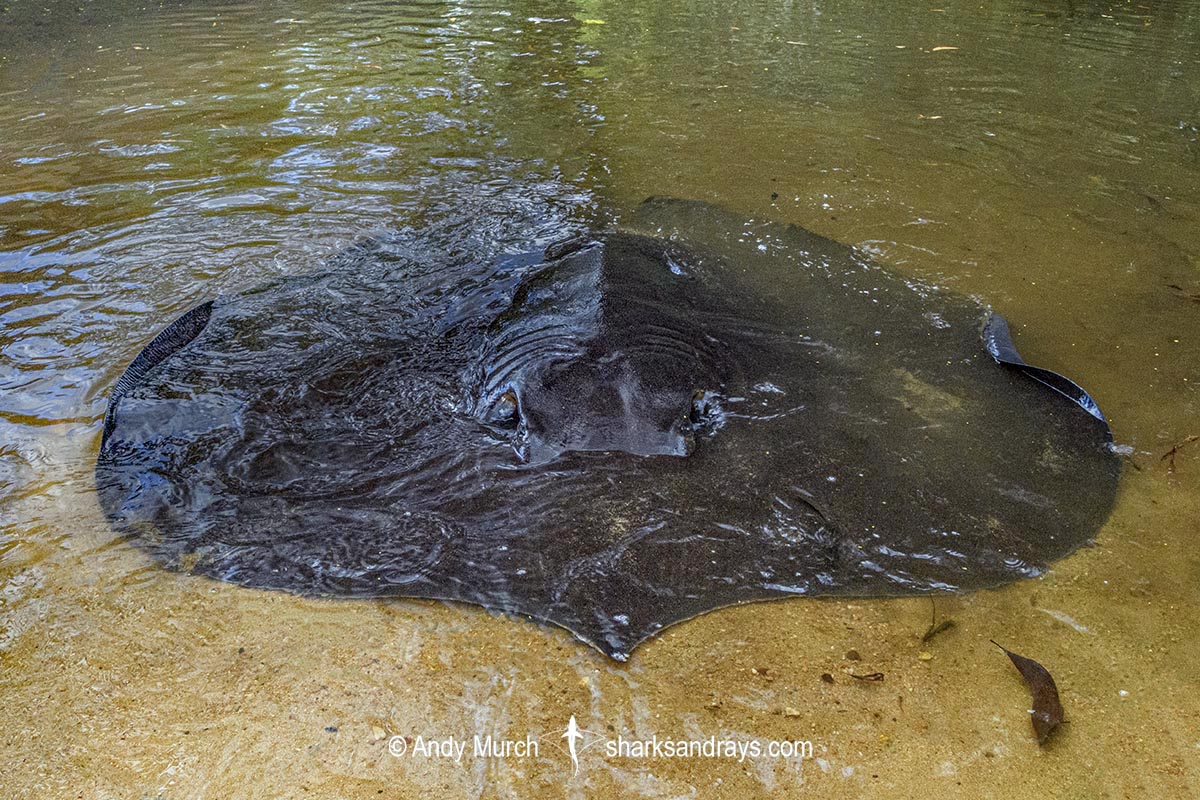
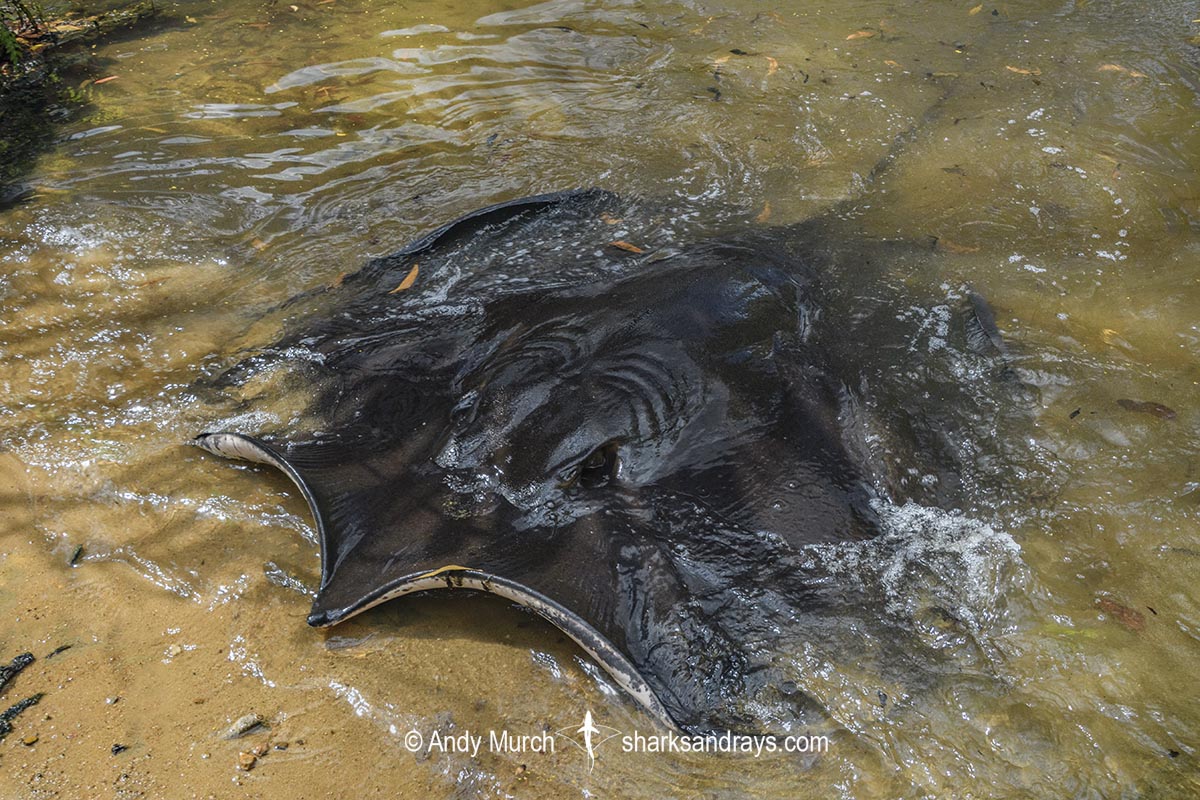
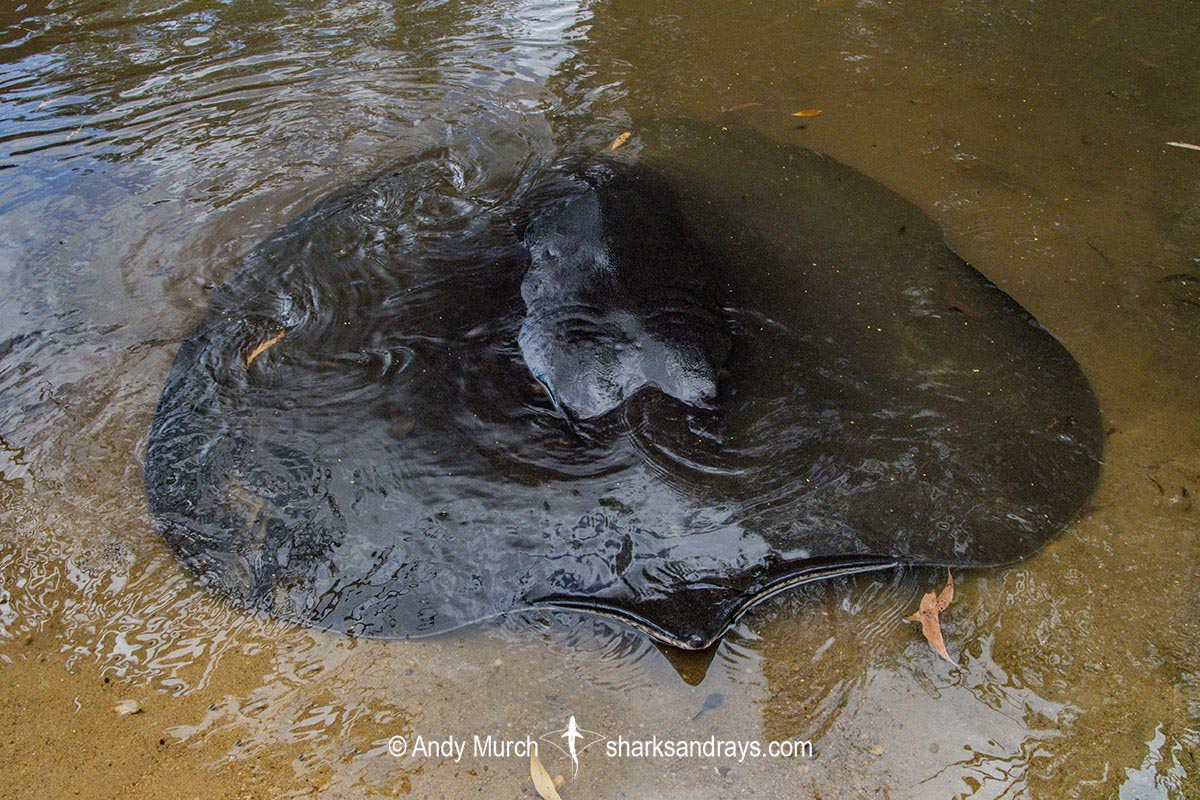
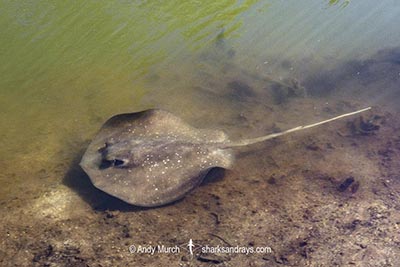
A large stingray with a sub-circular disc that is slightly narrower than long. Torso relatively narrow. Anterior margins of discs mostly straight with an acutely pointed snout. Pectoral fin apices and posterior pectoral margins broadly rounded. Pelvic fins very short, not extending beyond posterior disc margin. Eyes very small. Mouth small with 4 oral papillae. Labial furrows indistinct. Broad nasal curtain with a short fringe along the posterior margin.
Disc covered in small denticles. Tail slender at base, long and whiplike; length 1.9-2.2 x disc width. One caudal sting usually present.
Colour
Dorsum yellowish-brown to dark brown. On lighter individuals, a dark row of pores is often visible along disc margin. Ventrum white, with a broad dusky margin and central blotches. Tail beyond caudal sting dark.
Size
Maximum disc width 124cm. Disc width at birth unknown.
Conservation Status
LEAST CONCERN
The freshwater whipray (Urogymnus dalyensis) is an infrequent bycatch in gillnet fisheries. Although there is a small targeted indigenous fishery in Australia, this species occurs mostly in areas of low human habitation.
Habitat
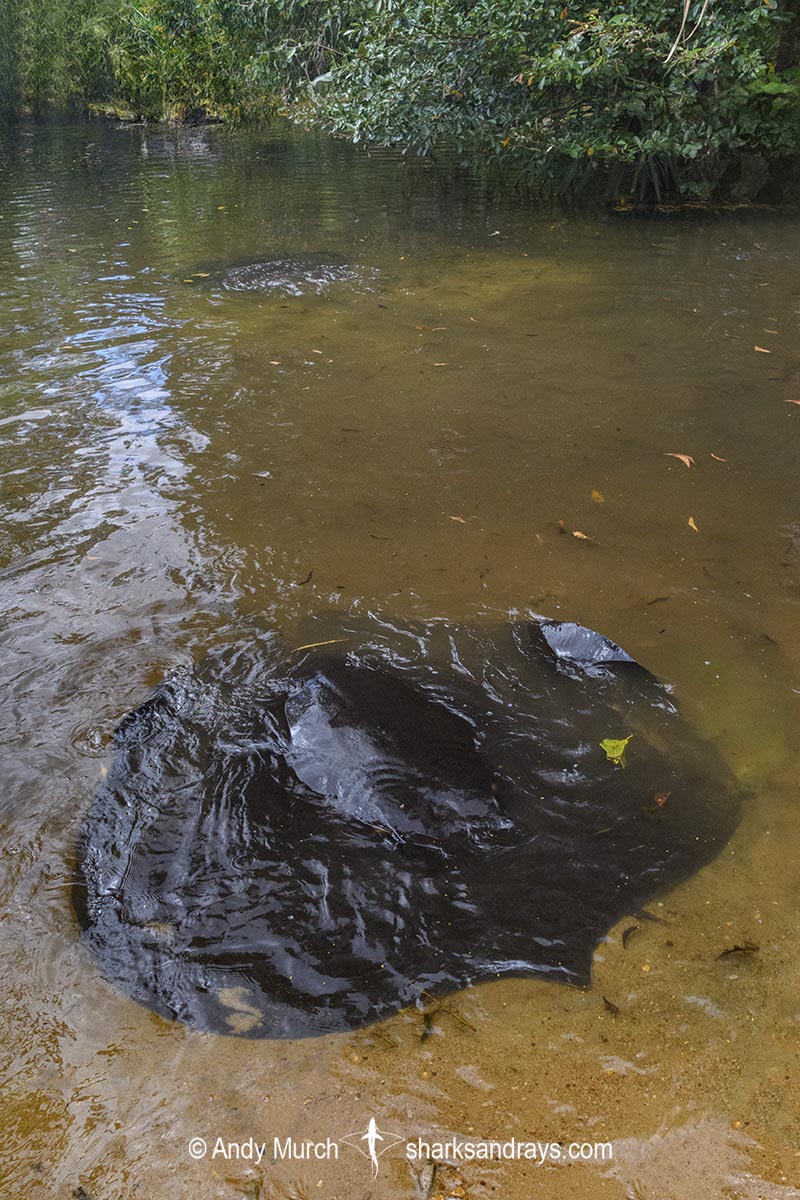
Tropical tropical fresh, brackish, and salt water environments. In shallow bays, estuaries, mangroves, and in rivers far inland. From 0-10m.
Distribution
Northern Australia, Western Papua, and souther PNG.
Reproduction
Viviparous. Litter size unknown.
Diet
The freshwater whipray’s diet consists mostly of prawns and small fishes.
Behavior
Known to beach itself in pursuit of prey in the intertidal zone.
Reaction to divers
Fairly easy to approach but will retreat if threatened.
Diving logistics
It is possible to find freshwater whiprays in rivers accessible to Darwin, Australia, but all of the rivers where it is found are also prime saltwater crocodile habitat, so it is not advisable to snorkel where this species naturally occurs.

What’s new
View our full list of updates
Similar species
Mangrove Whipray Distinguishable by more kite-shaped disc, rougher skin often with white flecks, and white tail filament.
