
Common names
Australian Marbled Catshark, Macleay’s Catshark.
Binomial
Atelomycterus macleayi.
Synonyms
None.
Identification
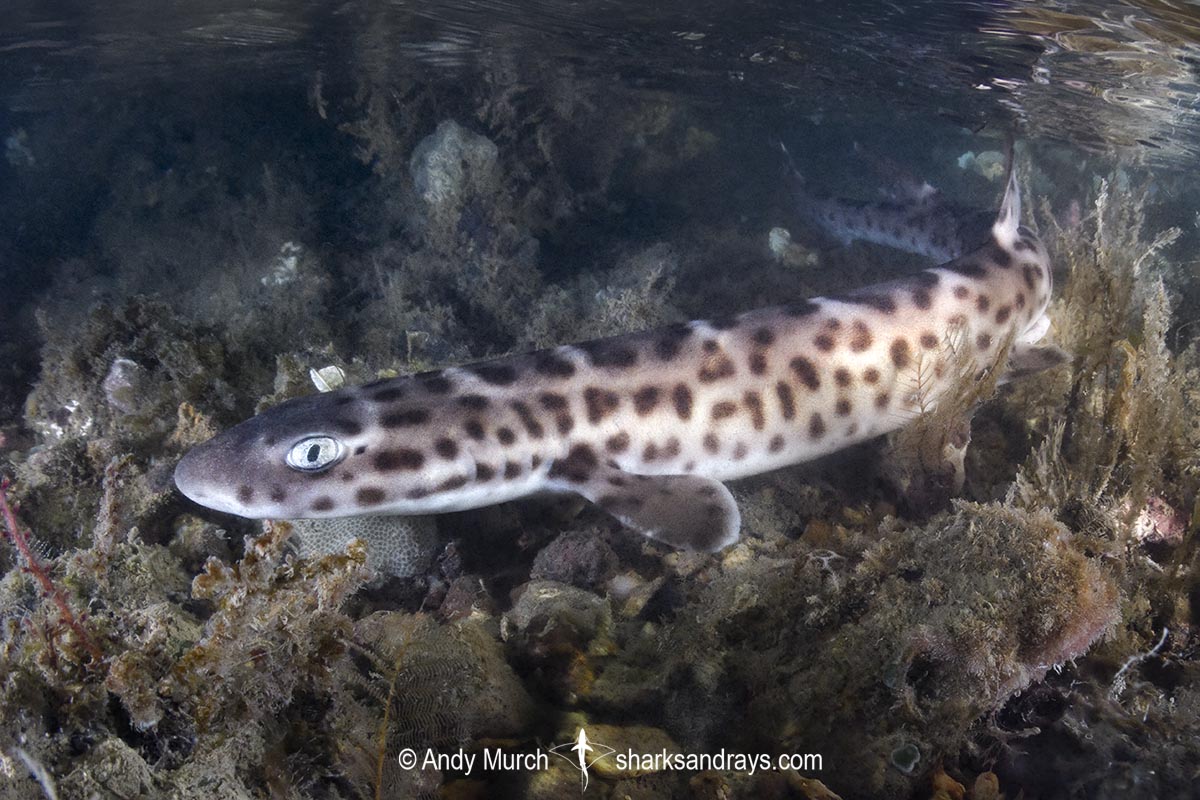
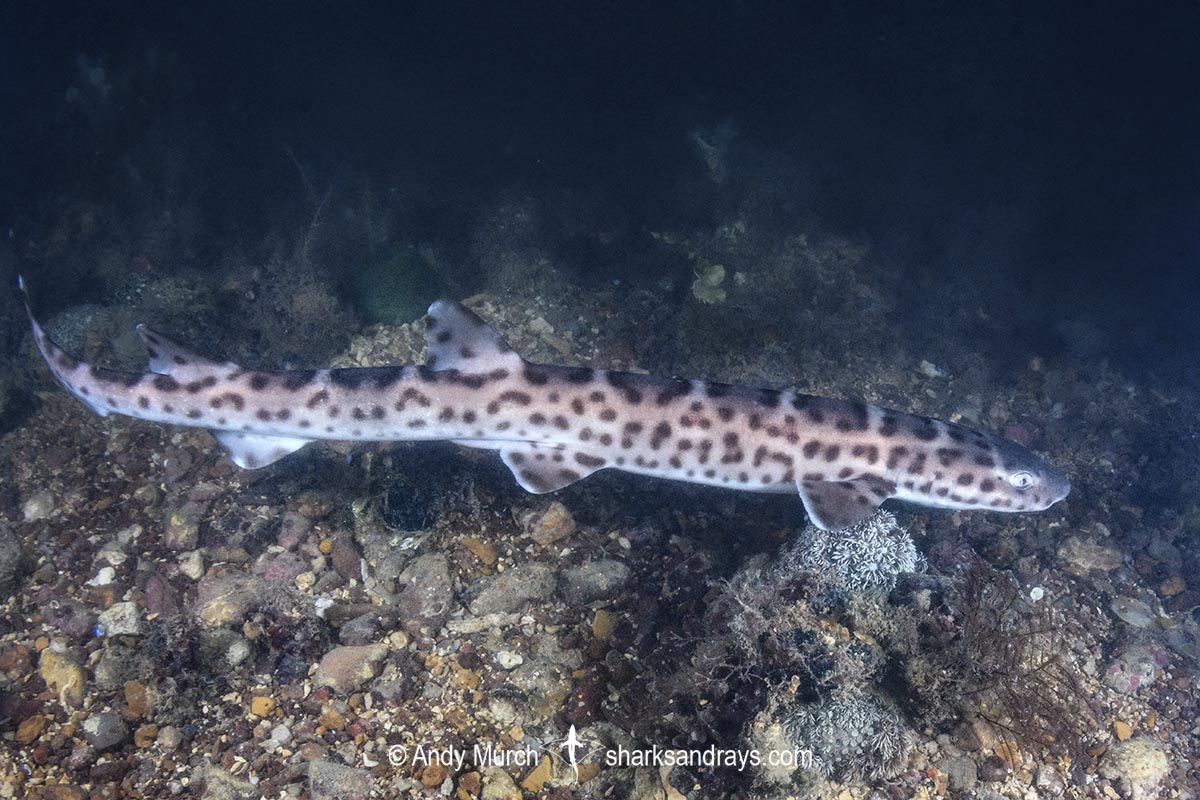
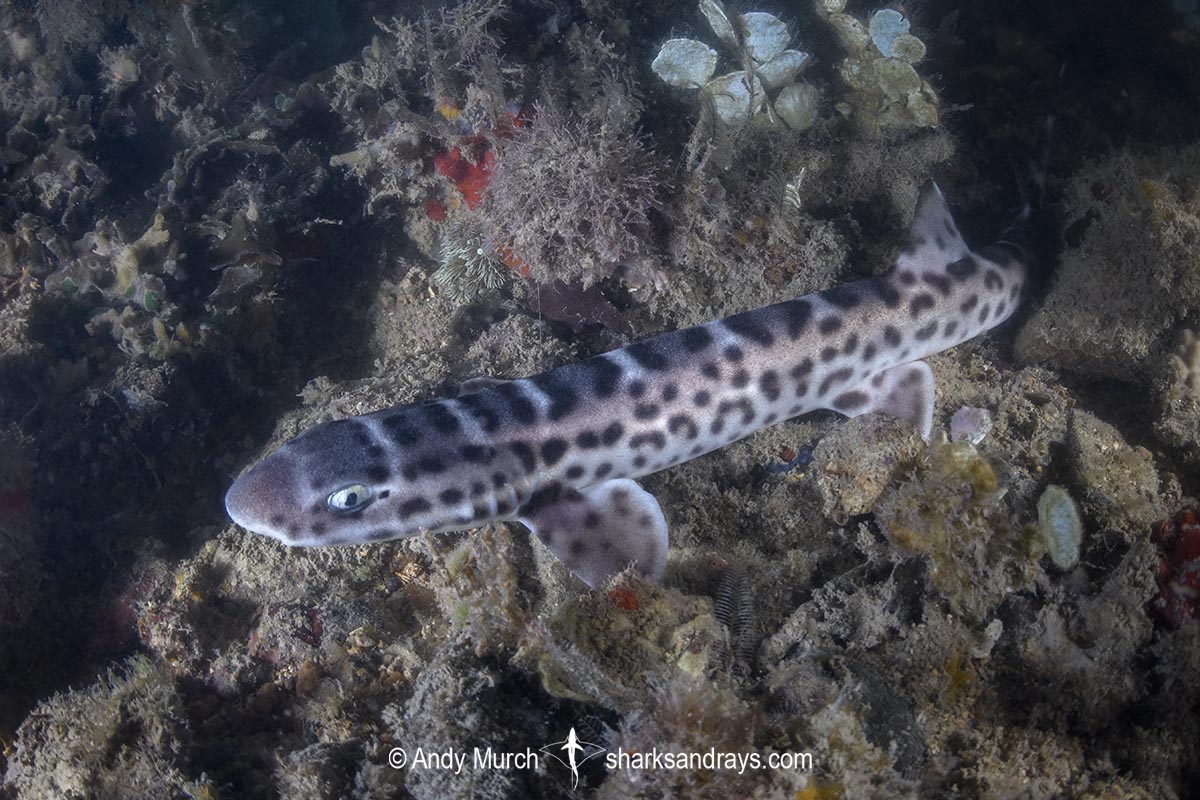
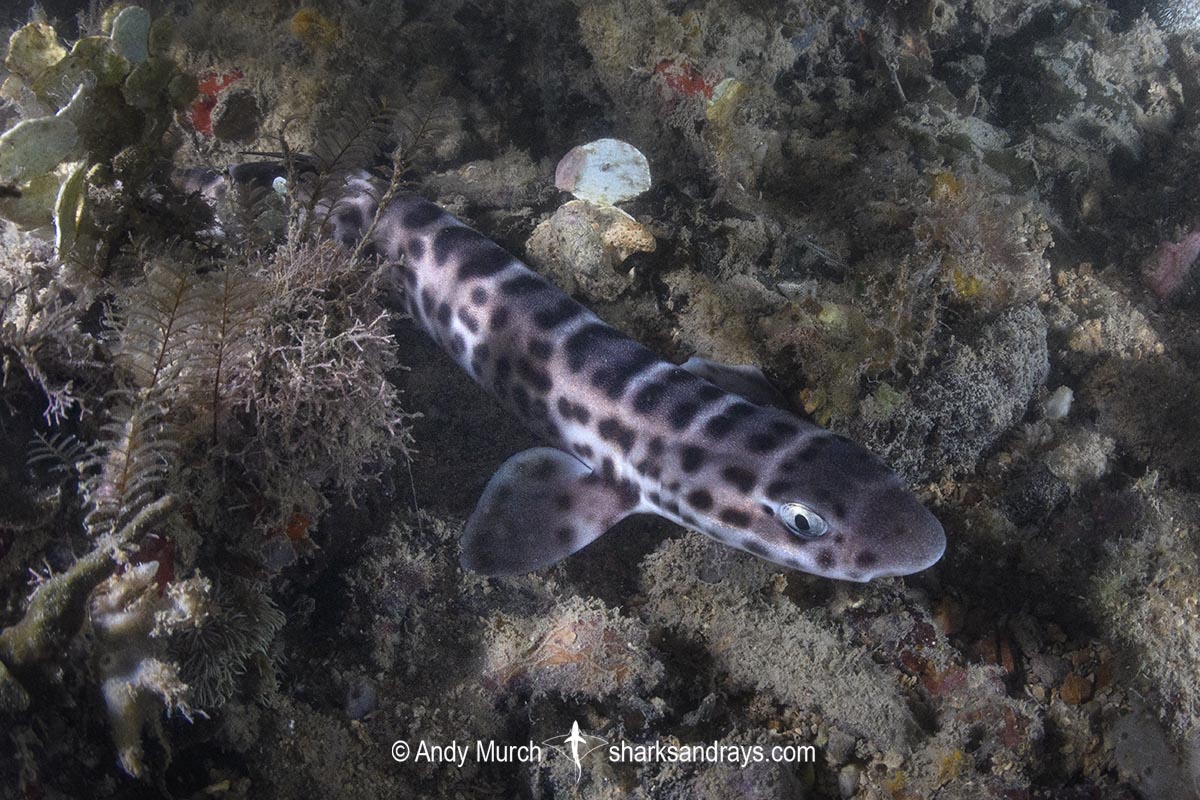
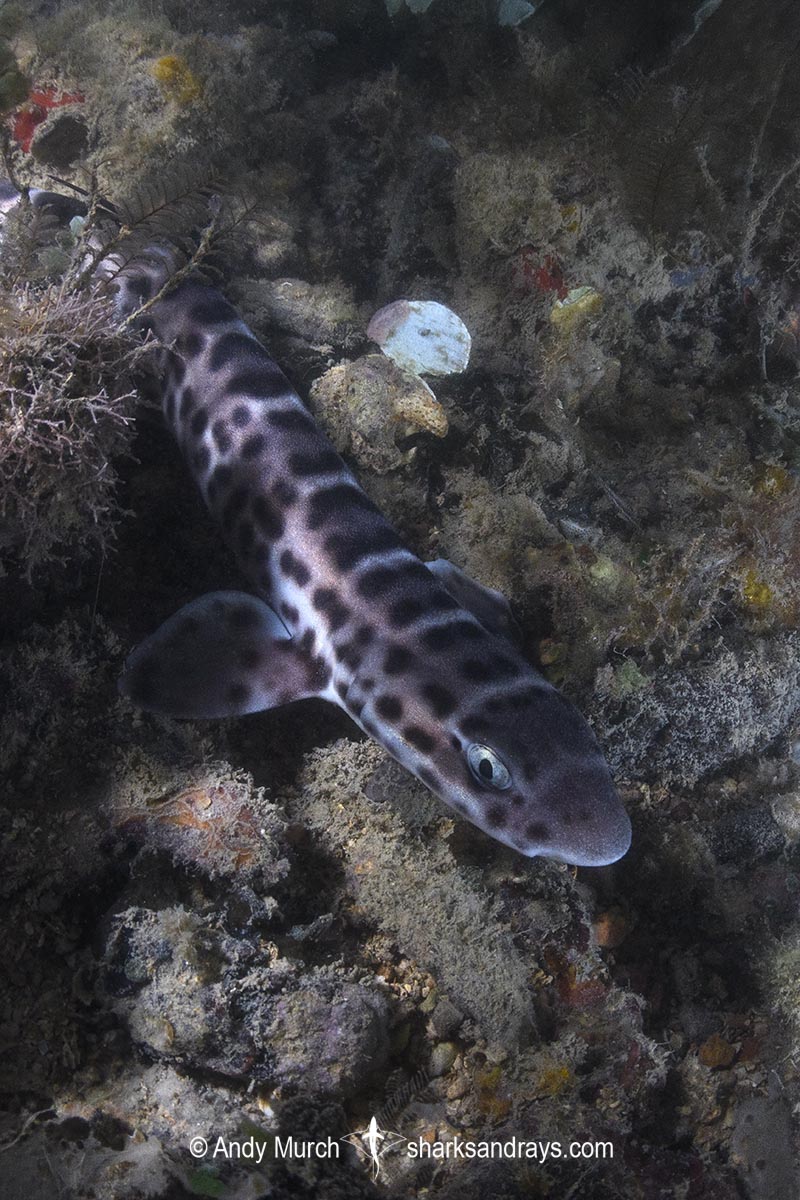
Long, slender body with a narrow head. Mouth V-shaped and wide, greater than snout length. Long labial furrows. Greatly enlarged nasal flaps extend from nares to mouth. First dorsal fin origin level with pelvic fin insertion. Second dorsal fin origin level with midpoint of anal fin base. First and second dorsal fins of roughly equal size, with rounded apices. Lower caudal lobe indistinct.
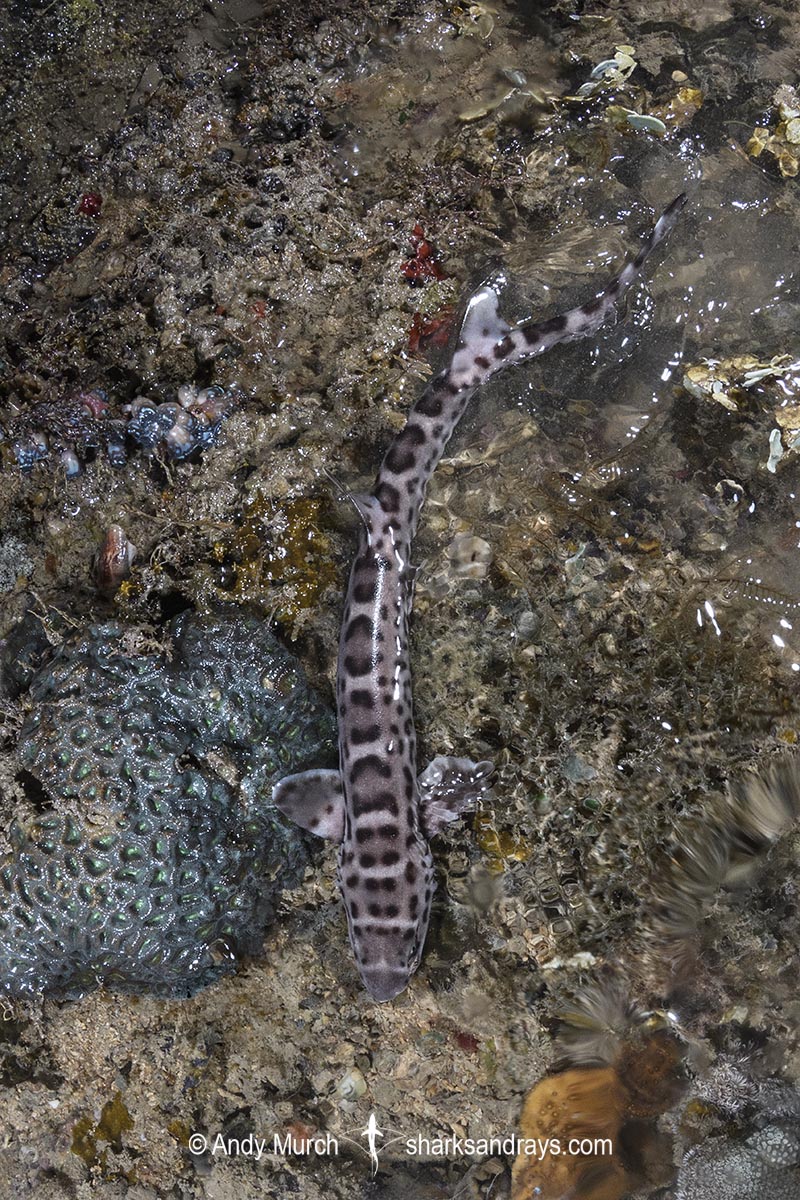
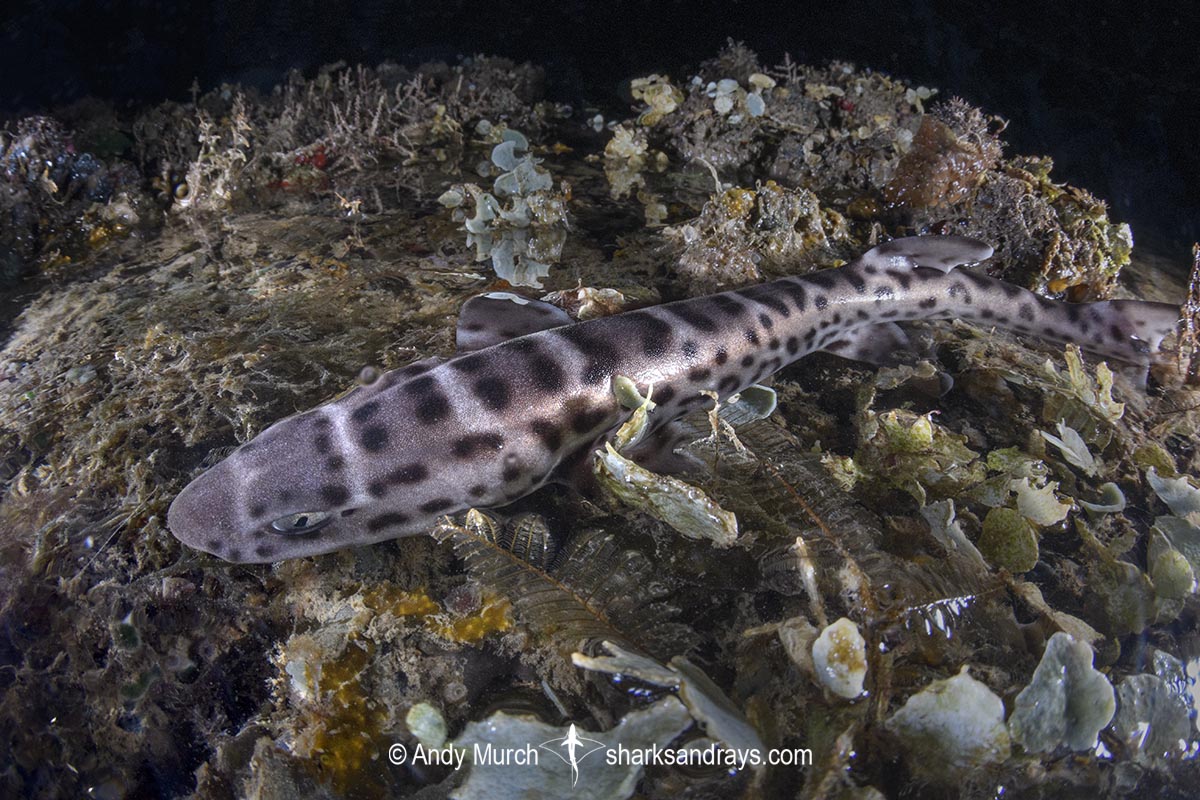
Dorsal coloration including fins reddish brown to brownish-grey fading to white ventrally, with numerous smaller than eye size black spots. Many Dusky saddles along entire midline; ringed by black spots and separated by thin pale crossbars. Ventrum white.
Size
Maximum length 60cm. Size at birth 10cm.
Conservation Status
LEAST CONCERN
The Australian Marbled Catshark (Atelomycterus macleayi) is probably a discarded bycatch in inshore fisheries, but much of its range is closed to fishing. Although it is sometimes found quite deep, it’s preference for shallow water and reef environments provide protection from most fishing methods.
Habitat
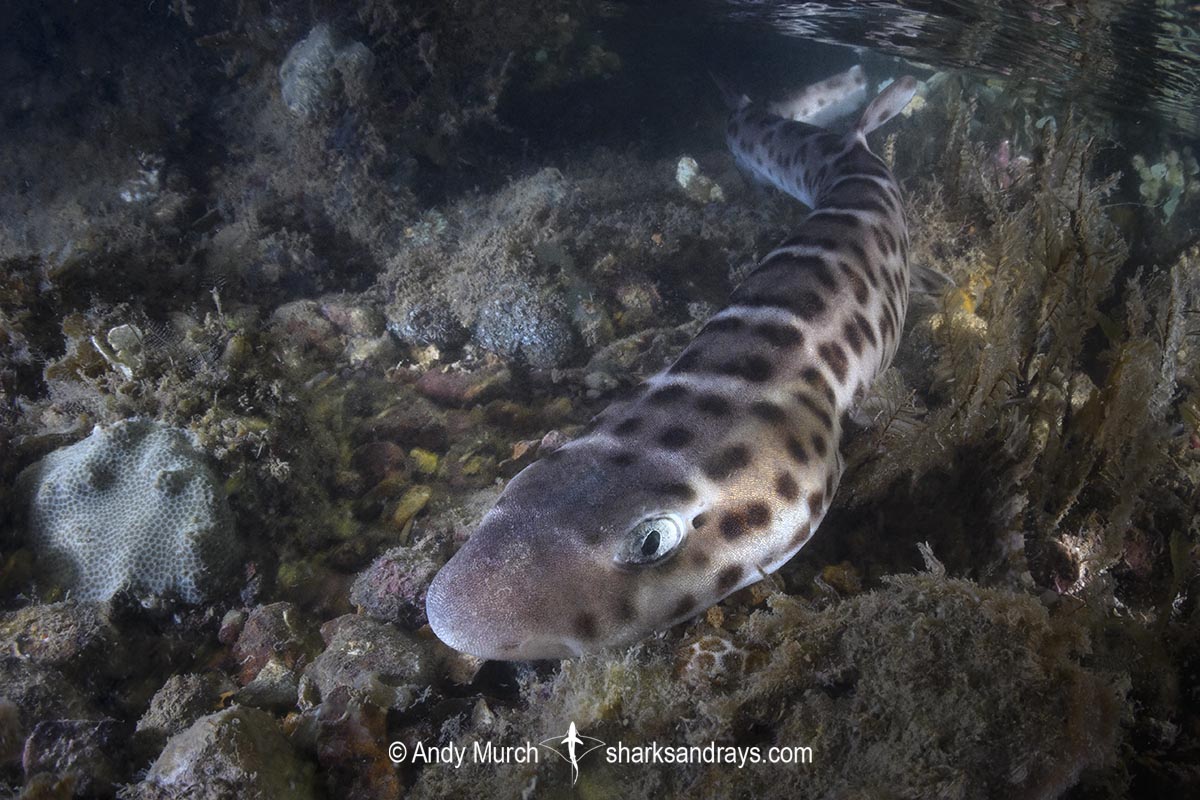
The Australian marbled catshark is found in tropical rocky and sandy environments from the intertidal zone to 60m, but usually less than 4m.
Distribution
Confined to the Timor Sea along the northern coast of Australia, from Port Hedland in Western Australia eastward to Melville Island in the Northern Territory. Not recorded in Indonesia.
Reproduction
Oviparous. Lays paired egg cases, approximately 7cm in length.
Diet
Unknown.
Behavior
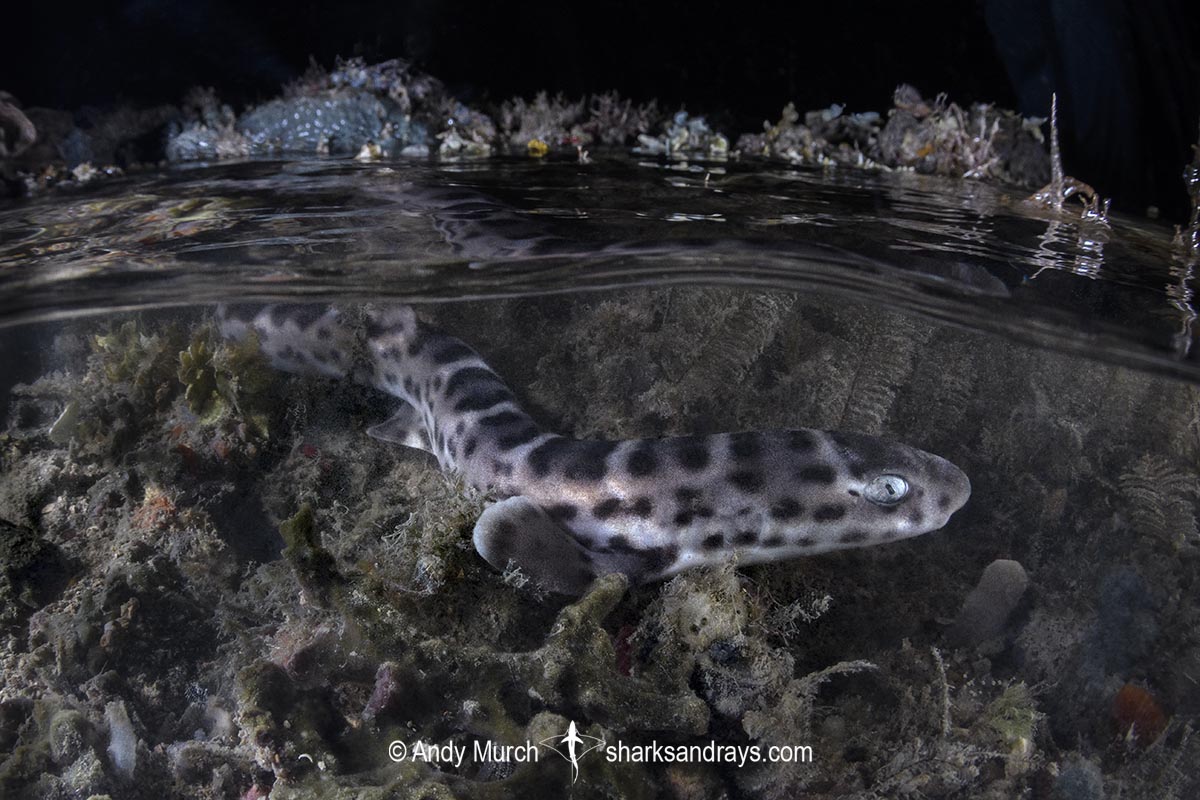
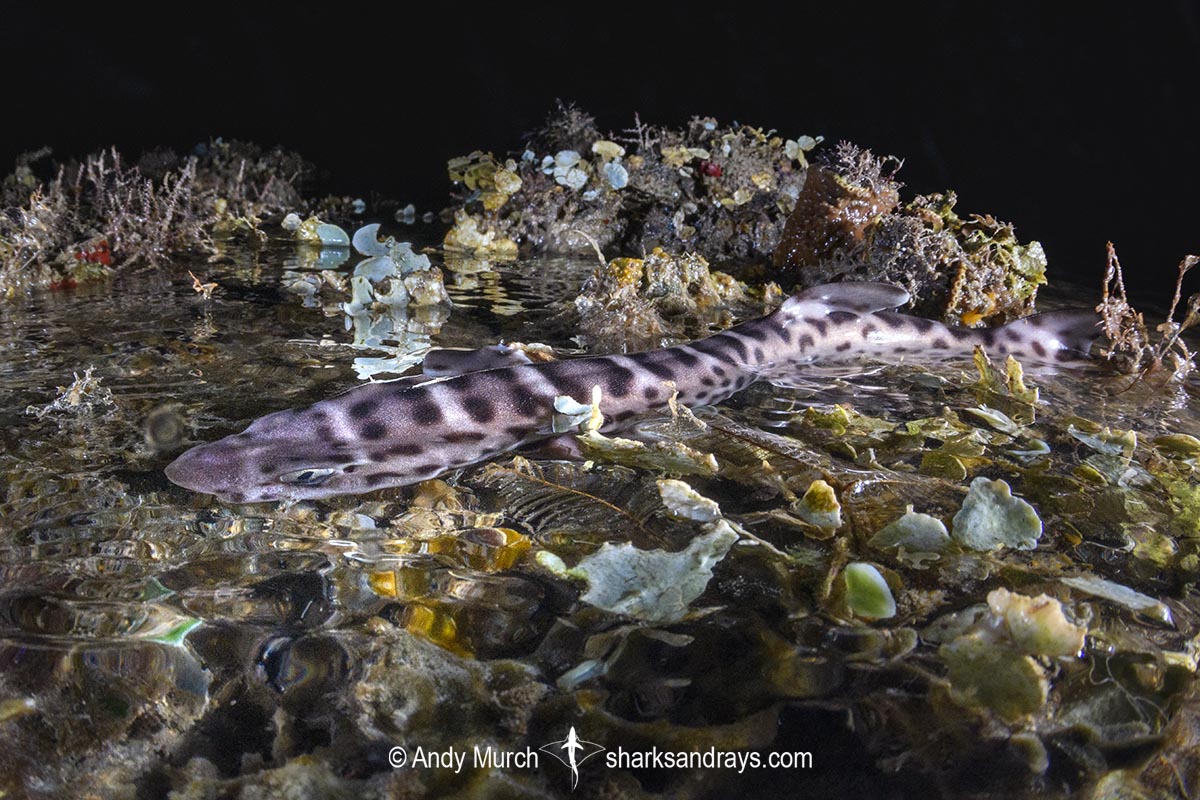
Rests in crevices in the reef during the day. Actively forages on the reef at night, sometimes venturing into shallow water only a few centimetres deep.
Reaction to divers
Easy to approach when encountered in the shallows.
Diving logistics
Macleay’s catshark is rarely encountered by divers. Partly, because it inhabits turbid environments where divers are unlikely to go, and partly because that same environment is also inhabited by extremely dangerous saltwater crocodiles.
The only time that it is relatively safe to look for this shark is during extremely low spring tides, when the ocean recedes far from shore and catsharks are confined to small rock pools. Even then, the danger of crocodile encounters is not completely negated. Some of the beaches around Darwin are worth exploring if you are there at the right time of year, but it is important to have spotters with you and stay far away from the ocean’s edge where crocodiles are likely to be waiting for the incoming tide.
Similar species
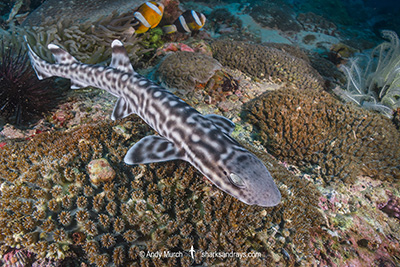
Coral Catshark Distinguished by a much denser covering of black and white spots and irregular lines as well as more northerly range.
Spot-belly Catshark Distinguished by prominent white spots within broken dark rings on flank, and spots on underside.
Bali Catshark Distinguished by subtle saddles and small black spots with light centres. Known only from Bali.
